Thinning Is Fire Mitigation, Not Deforestation
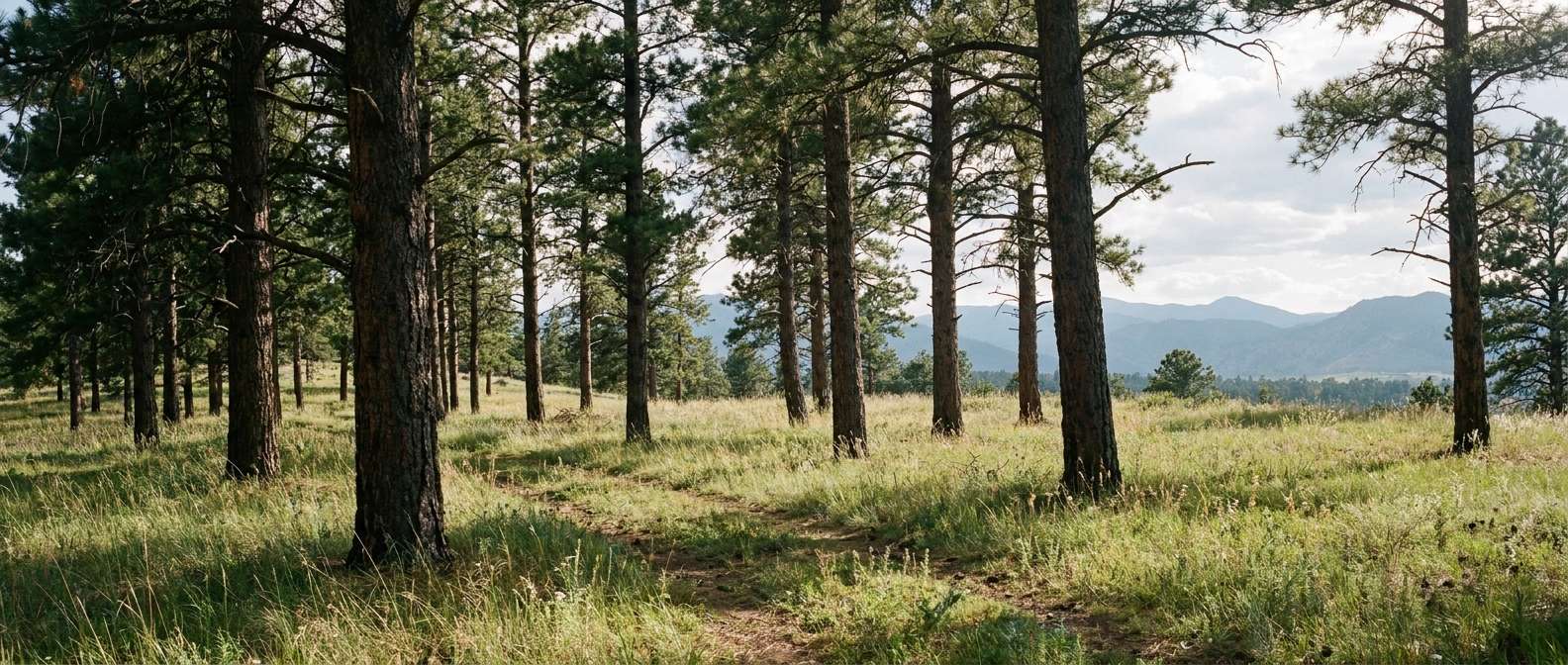
The healthiest stands in the Wet Mountains foothills are the thinned ones. Historic ponderosa forest ran open and grassy-floored; decades of fire suppression pushed many foothills lots to several times that density, with oak and young conifers filling the understory. Thinning restores the spacing that stops crown fire — and the trees you keep grow stronger for the water and light.
- Crown spacing. Roughly 10 feet between mature canopies beyond the 30-foot line, more on slopes — so fire cannot jump tree to tree toward the house.
- Ladder-fuel pruning. Lower limbs pruned up and understory shrubs cleared beneath them; the surface fire stays on the surface.
- Hazard trees down. Standing dead, drought-stressed and storm-damaged trees dropped and removed before wind decides the timing for you.
- Deadwood out. Downed limbs and dry litter raked out of the zones where embers land and start.
After the Fire: Damaged-Tree Assessment
The 2026 fire season left a hard new category of tree work in Pueblo County. On properties in and around the burn area, scorched trees stand next to intact homes — some will recover, many will not. A tree that lost most of its crown to heat, or whose cambium is burned through around the trunk, is dying on a delay: over the next seasons it dries, stiffens and eventually fails, usually in wind. Near a house, a driveway or a power drop, that is a removal job, and it is significantly cheaper and safer done early, while the wood still handles predictably.
An honest assessment separates the keepers from the hazards — green crown ratio, bark condition, lean and what's beneath it — and removal is quoted tree by tree, in writing. No pressure to clear-cut what survived; the point of fire mitigation is keeping the living trees safe to live with.
Insured Work, Documented Results
Ask any tree bidder for liability and workers' comp certificates — tree work is dangerous, and an uninsured crew's accident becomes the homeowner's problem. Every crew we refer is licensed and insured, photographs the work before and after, and invoices it clearly — precisely the documentation Colorado's insurance law (HB 25-1182) requires carriers to credit, and the receipts the state's $1,000-a-year mitigation tax credit wants at filing.
Limbs and small stems are chipped or hauled as part of the job — Pueblo County has no free slash pickup — and larger wood can be bucked to firewood length and left, if you want it. Call (719) 415-3216 for a free assessment of the trees around your home.